
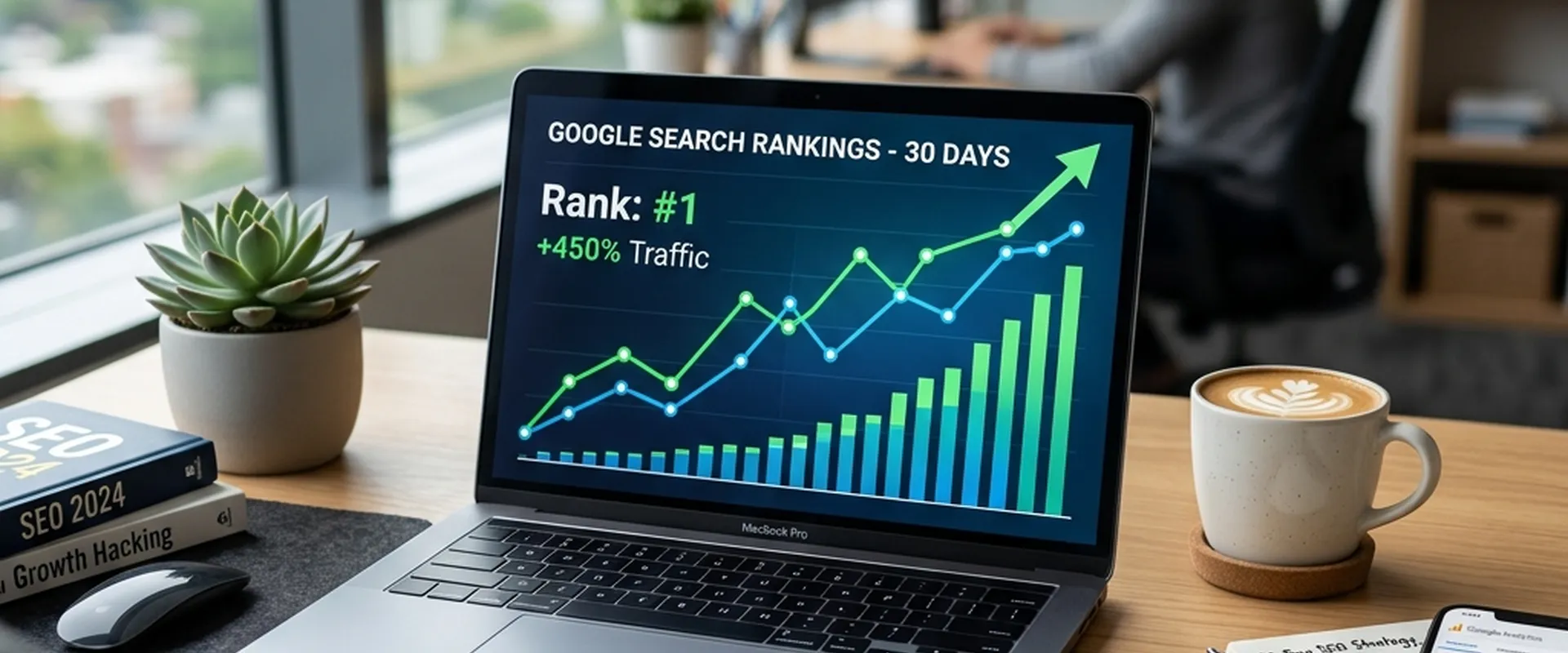
Is It Really Possible to See SEO Results in a Month?
When it comes to search engine optimization, the most common piece of advice you will hear is that "SEO is a marathon, not a sprint." While it is entirely true that building sustained, long-term organic traffic takes months or even years of consistent effort, the idea that you cannot see significant improvements in just 30 days is a myth.
If your website has been lingering on the second or third page of Google, or if you have published great content that simply isn't getting the traction it deserves, a focused, month-long sprint can absolutely move the needle.
Improving your Google rankings in 30 days requires a tactical approach. It is not about tricking the algorithm with shady black-hat techniques that will inevitably get your site penalized. Instead, it is about identifying the lowest-hanging fruit—fixing technical errors, optimizing existing assets, improving user experience, and sending the right relevance signals to search engines.
In this comprehensive guide, we are going to break down exactly how to improve Google rankings in 30 days. We have structured this as a four-week action plan. By dedicating each week to a specific pillar of SEO, you will systematically optimize your website from the ground up.
Whether you are a seasoned webmaster or a beginner trying to figure out Zero Server Tools, this step-by-step blueprint is designed to deliver explosive growth and measurable results.
Week 1: The Technical SEO Overhaul (Days 1-7)
Before you worry about writing new content or building backlinks, you must ensure that your website's foundation is solid. Think of technical SEO as the plumbing of your house. If the pipes are broken, it doesn't matter how beautiful the furniture looks; the house is still going to flood.
Search engine crawlers need to easily access, understand, and index your website. Here is how you spend your first week making sure they can.
Day 1-2: Conduct a Comprehensive Site Audit
Start by running your website through a reliable SEO auditing tool (like Screaming Frog, Ahrefs, or SEMrush). You are looking for critical errors that act as roadblocks for Googlebot: - Crawl Errors (404 pages): Find any broken links on your site and redirect them to relevant, live pages using 301 redirects. - Indexability Issues: Check your `robots.txt` file and meta robots tags. Ensure you are not accidentally blocking search engines from indexing your most important pages. - XML Sitemap: Verify that your XML sitemap is up-to-date and submitted to Google Search Console.
Day 3-4: Master Core Web Vitals and Site Speed
Google has explicitly stated that page speed and user experience (measured via Core Web Vitals) are ranking factors. If your site takes more than three seconds to load, visitors will bounce, sending a negative signal to Google. - Optimize Images: Compress all images using Next-Gen formats like WebP. Ensure every image has descriptive alt text. - Minify Code: Minify HTML, CSS, and JavaScript files to reduce their size. - Leverage Browser Caching: Ensure returning visitors don't have to re-download the same assets. - Evaluate Hosting: If your server response time is slow, it might be time to upgrade your hosting environment.
Day 5: Mobile-First Optimization
Google uses mobile-first indexing, meaning it looks at the mobile version of your site to determine its rankings. - Test your site using Google’s Mobile-Friendly Test. - Ensure buttons are easily clickable, text is readable without zooming, and the navigation menu works flawlessly on smaller screens. - Avoid intrusive pop-ups on mobile devices, as Google actively penalizes sites that use them aggressively.
Day 6-7: Fix Site Architecture and URL Structure
Your website should be structured logically. A good rule of thumb is that any page on your site should be accessible within three clicks from the homepage. - Clean up URLs: Ensure your URLs are short, descriptive, and include your target keyword. Change URLs like `yourdomain.com/p=123` to `yourdomain.com/improve-google-rankings`. - Implement Breadcrumbs: Breadcrumbs help users navigate your site and help search engines understand the hierarchy of your content.
Week 2: On-Page Optimization and Keyword Targeting (Days 8-14)
With the technical foundation laid, Week 2 is all about on-page optimization. This involves tweaking the content and HTML source code of your individual pages to ensure they are highly relevant to specific search queries.
Day 8-9: Keyword Gap Analysis and Search Intent
You cannot rank if you do not know what your audience is searching for. Review your current keyword strategy. Are you targeting broad, highly competitive terms, or are you focusing on long-tail keywords that drive targeted traffic? - Analyze Search Intent: When someone searches for your target keyword, what are they looking for? Do they want to buy something (transactional), learn something (informational), or find a specific website (navigational)? Ensure your page matches the exact intent of the searcher. - Monitor Your Progress: It is impossible to know if your 30-day sprint is working if you aren't tracking your keyword movements. For an in-depth understanding of how to do this effectively, read The Ultimate Guide to Tracking Your Search Rankings: Mastering the SEO Keyword Position Tracker.
Day 10-11: Optimize Title Tags and Meta Descriptions
Your title tag is arguably the most important on-page SEO factor. It tells Google what the page is about and acts as your headline in the search results. - Front-Load Keywords: Place your primary keyword as close to the beginning of the title tag as possible. - Write Compelling Meta Descriptions: While meta descriptions are not a direct ranking factor, they heavily influence your Click-Through Rate (CTR). A higher CTR signals to Google that your page is relevant, which can boost your rankings. Write action-oriented descriptions that encourage clicks.
Day 12: Perfecting Header Tags (H1, H2, H3)
Search engines use header tags to understand the structure and subtopics of your content. - Use only one H1 tag per page, and ensure it includes your primary keyword. - Break up your text using H2 and H3 tags. These should incorporate secondary keywords and semantic variations of your main topic to capture long-tail traffic.
Day 13-14: Semantic SEO and TF-IDF
Gone are the days of "keyword stuffing." Today, Google uses natural language processing to understand the context of an article. - Incorporate LSI (Latent Semantic Indexing) keywords naturally into your text. - Answer related questions. If you are writing about "healthy diets," you should naturally include terms like "nutrition," "meal plan," "calories," and "weight loss." This builds topical authority and proves to Google that your content is comprehensive.
Week 3: Content Enhancement and Strategic Internal Linking (Days 15-21)
Content is king, but the internet is saturated with mediocre content. To rank on the first page, your content must be objectively better than the current top-ranking pages. During Week 3, you will upgrade your existing content and tie it all together with internal links.
Day 15-16: The "Content Pruning" Strategy
Not all content is good content. Sometimes, old, outdated, or thin pages can drag down your entire website's authority. - Identify pages that get zero organic traffic and offer little value to the user. - Decide to Update, Redirect, or Delete: If the topic is relevant, rewrite and update it. If it's redundant, redirect (301) it to a more comprehensive page. If it's completely useless, delete it.
Day 17-18: Upgrading Underperforming Content
Find pages that are ranking on page 2 or 3 of Google for your target keywords. These are your "low-hanging fruits." By giving them a slight push, you can easily move them to page 1. - Increase Word Count & Depth: Look at the top 3 ranking articles for your keyword. If they are 2,000 words long and yours is 500 words, you need to expand your article with more actionable, detailed information. - Add Multimedia: Embed relevant videos, infographics, and custom images to increase the time users spend on your page (dwell time). - For a massive list of ideas on how to push this further, check out these 25 Proven Strategies to Skyrocket Your Blog Traffic.
Day 19-21: The Power of Internal Linking
Internal linking is one of the most underrated SEO strategies. It helps distribute page authority (link equity) throughout your site and establishes an information hierarchy. - Audit Existing Internal Links: Make sure your most important pages (pillar pages) have the most internal links pointing to them. - Use Optimized Anchor Text: When linking from one article to another, use descriptive anchor text that includes the target page's keyword. Avoid generic anchor text like "click here." - Create Content Silos: Group related articles together by interlinking them extensively. This demonstrates topical authority to search engines. If you want a complete breakdown of how to structure your site for maximum growth, read How to Increase Blog Traffic: The Ultimate Step-by-Step Guide for Explosive Growth.
Week 4: Building Authority and Off-Page Signals (Days 22-28)
Google relies heavily on off-page signals to determine trustworthiness and authority. The most prominent of these signals are backlinks—links from other websites pointing to yours. Week 4 is dedicated to generating these crucial votes of confidence.
Day 22-23: Unlinked Brand Mentions and Broken Link Building
Earning backlinks can be difficult, but there are a few straightforward methods to secure quick wins. - Unlinked Mentions: Search the web for instances where people have mentioned your brand or products but haven't linked to you. Reach out to the author or webmaster and politely ask them to turn that mention into a clickable link. - Broken Link Building: Find websites in your niche that are linking out to dead (404) pages. Email the site owner, alert them to the broken link (which hurts their SEO), and suggest your high-quality, relevant article as a replacement.
Day 24-25: Guest Blogging on Relevant Industry Sites
Guest posting remains one of the most effective ways to build high-quality backlinks and tap into new audiences. - Identify authoritative blogs in your niche that accept guest contributors. - Pitch them highly unique, valuable article ideas that their audience will love. - In the author bio or naturally within the content, include a link back to an optimized page on your website.
Day 26: Optimize Your Google Business Profile (For Local SEO)
If your business has a physical location or serves a specific geographic area, optimizing your local presence is mandatory for quick ranking improvements. - Claim and verify your Google Business Profile (GBP). - Ensure your Name, Address, and Phone number (NAP) are consistent across all online directories. - Encourage happy customers to leave positive reviews, and ensure you reply to every review promptly.
Day 27-28: Leverage Social Signals and Content Distribution
While social media shares are not a direct Google ranking factor, they drive immediate traffic, increase brand visibility, and often lead to natural backlinks as more people discover your content. - Share your newly optimized content across all your social media platforms (LinkedIn, Twitter, Facebook, Pinterest). - Engage in niche-specific forums (like Reddit, Quora, or industry Facebook groups) and provide helpful answers, linking back to your in-depth articles where appropriate.
Days 29-30: Analysis, Refinement, and Next Steps
You have executed a massive overhaul of your technical, on-page, and off-page SEO. The final two days of this 30-day sprint are about looking at the data.
Measuring Your Success
Log into Google Analytics and Google Search Console to monitor your progress. - Are your impressions increasing? - Is your Click-Through Rate (CTR) improving due to your new meta descriptions? - Which keywords have seen the most upward movement?
SEO is an iterative process. The data you gather at the end of these 30 days will dictate your strategy for the next 30 days. If a specific page jumped from page 3 to page 2, you know that adding a few more internal links or a high-quality backlink could push it onto page 1.
Avoiding Common Pitfalls
As you review your results, ensure you haven't fallen into the trap of over-optimization. Keyword stuffing, buying cheap backlinks from Fiverr, or duplicating content will trigger Google penalties that can destroy your rankings overnight. Always prioritize the human reader over the search engine algorithm.
Conclusion
Improving your Google rankings in 30 days is not a fantasy; it is a highly achievable goal if you follow a structured, disciplined blueprint. By fixing technical roadblocks in Week 1, aligning your on-page elements with search intent in Week 2, dramatically improving your content in Week 3, and securing authoritative backlinks in Week 4, you signal to Google that your website is a high-quality, relevant resource.
Remember, the algorithms are constantly evolving, but the core principle remains the same: provide the best possible answer to the user's query in the most accessible, user-friendly format. Commit to this 30-day challenge, execute the steps outlined above, and watch your organic traffic skyrocket.
Frequently Asked Questions (FAQs)
1. Is it really possible to see SEO results in just 30 days?
Yes, absolutely. While brand-new domains may take longer due to Google's "sandbox" effect, established websites can see massive ranking improvements in 30 days by fixing technical errors, optimizing existing content for better search intent, and improving internal linking structures. The key is to focus on "low-hanging fruit" like pages already ranking on page 2 or 3.
2. What is the most important ranking factor for Google right now?
There is no single "most important" factor; Google's algorithm uses hundreds of signals. However, high-quality, relevant content that perfectly satisfies user search intent, paired with a technically sound website (fast loading times, mobile-friendly) and authoritative backlinks, forms the holy trinity of modern SEO.
3. Does social media impact my Google rankings? Social media signals (likes, shares, retweets) are not direct ranking factors for Google. However, social media is a powerful distribution channel. Getting your content in front of more eyeballs increases the chances of other webmasters linking to your site, which is a direct and powerful ranking factor.
4. How often should I update my old blog posts?
You should conduct a content audit at least twice a year. If you notice a historically high-performing post losing traffic, it is time to update it. Add new statistics, expand on the content, improve the formatting, and update the publish date to signal to Google that the content is fresh and relevant.
5. Are backlinks still important for SEO?
Yes, backlinks remain one of the strongest indicators of a website's authority and trustworthiness. However, quality matters far more than quantity. One link from a highly respected, relevant industry publication is worth more than hundreds of low-quality links from spam directories.
6. What are Core Web Vitals, and why should I care?
Core Web Vitals are a set of specific factors that Google considers important in a webpage's overall user experience. They primarily measure loading performance, interactivity, and visual stability. Failing to meet the minimum thresholds for these vitals can result in a ranking penalty, as Google wants to serve fast, user-friendly sites to its searchers.
7. Why did my rankings drop after making changes?
It is normal to experience some "Google dance" (temporary ranking fluctuations) after updating a page or modifying site architecture as search engines recrawl and re-evaluate the content. However, if rankings drop consistently, you may have accidentally broken internal links, altered the search intent too much, or removed critical keyword placements. Always monitor your changes closely via Google Search Console.