
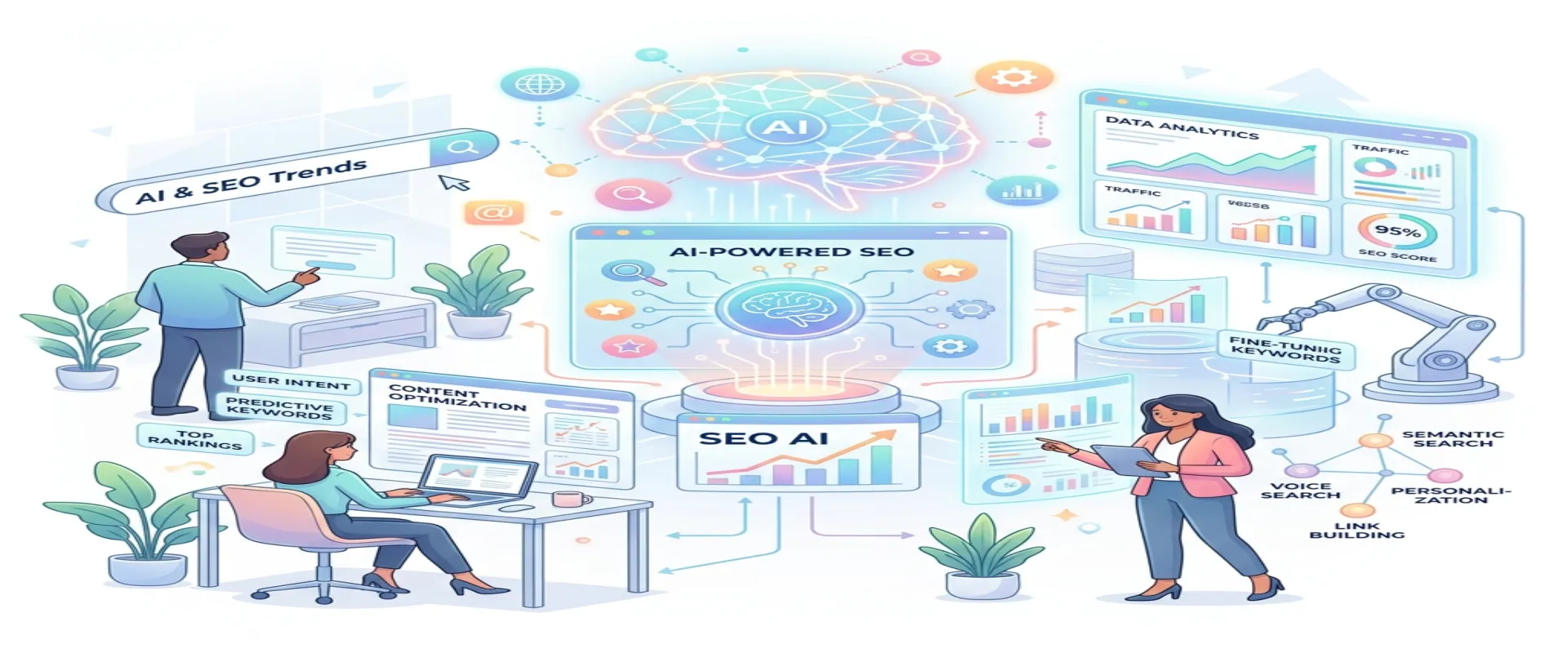
Search Engine Optimization (SEO) has never been a static field. From the early days of keyword stuffing, link farming, and directory submissions to the sophisticated, intent-driven algorithms of the modern internet, digital marketers and SEO professionals have always had to remain agile. However, the introduction and rapid acceleration of Artificial Intelligence (AI) into the search ecosystem represent a seismic shift. This is no longer merely an evolution of the rules; it is a fundamental revolution in how information is indexed, retrieved, and presented to users.
We are no longer just optimizing our digital properties for rudimentary crawlers that read exact-match text strings. Instead, we are optimizing for highly intelligent, continuously learning systems that understand context, nuance, and user intent on a near-human level. As AI continues to integrate seamlessly into both the search engines themselves and the diagnostic tools we use to optimize for them, the foundational rules of online visibility are being rewritten.
If your digital strategy is still relying entirely on the playbooks of 2020, you are likely already falling behind your competitors. The modern digital landscape requires a highly nuanced approach where AI represents both your greatest challenge and your most powerful solution. Whether you are managing a niche hobbyist blog or steering the digital presence of a massive enterprise site, understanding how AI is fundamentally changing SEO is no longer an optional skill. As you navigate this increasingly complex and technical terrain, leveraging comprehensive and versatile webmaster resources, such as those provided by Zero Server Tools, can provide the essential edge you need to analyze your performance, adapt your strategies, and ultimately conquer the Search Engine Results Pages (SERPs).
In this comprehensive, deep-dive guide, we will explore exactly how AI is reshaping the SEO landscape from the ground up. We will cover everything from content creation and technical site audits to the rise of zero-click searches, semantic understanding, and actionable strategies you can implement today to future-proof your website.
The Evolution of Search Engines: From Literal Strings to Conceptual Things
To fully grasp where search is heading, we must briefly look at how we arrived here. Historically, search engines functioned primarily as advanced digital filing cabinets. A user typed in a query, and the engine's algorithm scoured its index for pages that contained those exact words or phrases. This primitive era birthed dubious practices like keyword density obsession, where content writers would shoehorn the same exact-match phrase into a single paragraph as many times as possible, often rendering the text entirely unreadable for actual humans.
The paradigm began to shift significantly with Google’s Hummingbird update, which was closely followed by RankBrain, BERT (Bidirectional Encoder Representations from Transformers), and eventually MUM (Multitask Unified Model). These were not just minor algorithmic tweaks; they were fundamental architectural overhauls. Search engines began utilizing advanced natural language processing (NLP) and machine learning to understand the underlying meaning and intent behind a user's query, rather than just matching literal words.
Today, AI empowers search engines to grasp complex context. For example, if a user searches for "apple," the AI dynamically evaluates their recent search history, their geographic location, and the broader context of their query to determine whether they are looking for nutritional information about the fruit, or the latest stock price of the technology giant. This critical transition from focusing on "strings" (literal words) to "things" (entities, concepts, and the relationships between them) means that modern SEO is primarily about establishing topical authority.
Furthermore, the integration of generative AI directly into the SERPs—where AI synthesizes information to generate a comprehensive, conversational summary answering the user's query immediately at the top of the page—has accelerated this shift. The search engine is no longer satisfied with merely acting as a gateway to external websites; it actively wants to serve as an answering engine. For SEO professionals, this means the traditional goalposts have moved significantly. Ranking in the number one organic spot for a high-volume keyword is inherently less valuable if a generative AI summary perfectly resolves the user's query without them ever needing to click through to your site.
Content Creation vs. Content Quality: The Double-Edged Sword of Generative AI
Perhaps the most highly visible and fiercely debated impact of AI on SEO is in the realm of content creation. The sudden proliferation of accessible generative AI tools (like ChatGPT, Claude, and Gemini) has essentially democratized the ability to produce massive amounts of text in mere seconds. At first glance, this capability seems like an absolute dream come true for content marketers and publishers. Do you need 50 SEO-optimized blog posts by tomorrow morning? AI can accomplish that task without breaking a sweat.
However, this unprecedented capability has led to a predictable outcome: a massive flood of mediocre, derivative, and highly repetitive content polluting the internet. Because AI Large Language Models (LLMs) are fundamentally trained on existing, publicly available data, they inherently synthesize and regurgitate what has already been said by others. Out of the box, they do not create net-new insights, they do not conduct original research, and they cannot share genuine, lived human experiences.
Search engines anticipated this exact deluge. In response, they have fiercely doubled down on their quality rater guidelines, specifically emphasizing E-E-A-T: Experience, Expertise, Authoritativeness, and Trustworthiness. The recent addition of the first "E" (Experience) is particularly telling in the age of AI. Search engines desperately want to surface and reward content that demonstrates first-hand, real-world experience—something that an AI, by its very nature, simply cannot possess.
If your current content strategy relies entirely on prompting an AI to churn out generic, surface-level articles, you are highly vulnerable to broad core algorithm updates designed specifically to weed out programmatic spam. The winning strategy in 2026 is to utilize AI as a collaborative assistant, not as a solo author. Use AI tools to brainstorm initial outlines, overcome writer's block, generate meta descriptions, or analyze large datasets. However, you must ensure that the final published product is deeply infused with unique perspectives, original data, expert quotes, and a distinctly human voice. In a sea of AI-generated uniformity, a genuine human perspective becomes your most valuable competitive advantage.
Keyword Research in the Age of Semantic Search and Entities
Keyword research, the historical bedrock of SEO, used to be a highly mechanical, almost mathematical process. You would utilize a tool to find a keyword with high monthly search volume and low competition, and then you would diligently build a single web page aggressively targeting that specific phrase. Today, AI has rendered this rigid, one-to-one mapping strategy entirely obsolete.
Because modern search engines understand intent, context, and semantics, they intuitively know that queries like "how to fix a leaky pipe," "leaking pipe repair guide," and "DIY plumbing fix for dripping pipe" all signify the exact same user intent. You no longer need to waste resources creating separate, slightly modified pages for every possible permutation of a phrase. Doing so can actually lead to keyword cannibalization, where your own pages compete against each other in the SERPs.
Instead, AI has shifted the focus entirely toward topic clusters, entity relationships, and conversational queries. As voice search via smart speakers and natural language interfaces on mobile devices become the default behavior, users are articulating longer, more complex queries. They aren't just searching for "best running shoes"; they are asking conversational questions like, "What are the best running shoes for flat feet when running on wet pavement?"
Your keyword research strategy must rapidly evolve to match this behavioral shift. Instead of chasing isolated individual search terms, your goal should be to build comprehensive resource hubs that comprehensively cover a broad topic from every conceivable angle. This involves identifying the primary entity you want your brand to be known for and methodically mapping out all the related subtopics, semantic variations, and specific questions users might have. Utilizing a robust suite of utilities, such as those efficiently integrated within Zero Server Tools, can help you monitor your technical site performance and validate your internal linking structure while you focus your creative energy on building out this rich, semantic content architecture.
Technical SEO Gets a Massive AI Upgrade
While front-end content and backlinks often capture the spotlight in SEO discussions, the technical foundation of your website is what ultimately dictates whether search engines can effectively find, crawl, render, and index that content. In the realm of technical SEO, AI is proving to be an incredibly powerful, indispensable ally for webmasters and digital marketers.
Technical SEO site audits used to be painstakingly manual, deeply tedious processes. An SEO professional would run a site crawler and then spend days cross-referencing massive spreadsheets to identify broken links, missing meta tags, redirect loops, or slowly loading pages. Today, AI-powered diagnostic crawlers can not only identify these complex issues in real-time but also predict their potential negative impact on your organic rankings and suggest (or even execute) automated fixes.
For instance, AI algorithms can rapidly analyze vast amounts of server log files to help you understand exactly how search engine bots are interacting with your site's architecture. AI can instantly flag crawl traps, identify orphan pages, or highlight high-value pages that aren't being crawled frequently enough based on your current crawl budget. Machine learning algorithms can also deeply analyze site speed and granular user interaction metrics to pinpoint exact code bottlenecks that might be severely hurting your Core Web Vitals scores.
Furthermore, AI is completely revolutionizing how SEOs handle schema markup and structured data. By automatically scanning and understanding a page's content, AI tools can generate complex, nested schema JSON-LD code without requiring a developer. This explicit structuring of data helps search engines understand the exact relationships between different entities on your page, drastically increasing your chances of securing highly visible rich snippets and appearing prominently in Google's Knowledge Graph.
The Role of Retrieval-Augmented Generation (RAG) in Search
To truly understand how search is changing, you must understand the technology powering it. Retrieval-Augmented Generation (RAG) is the framework that allows AI models to provide accurate, up-to-date answers.
Standard LLMs are limited by their training data cutoff date. If a model was trained in 2024, it inherently doesn't know what happened in 2025. However, search engines need to provide real-time information. RAG solves this by combining traditional search retrieval with generative AI. When a user asks a question, the search engine first "retrieves" the most relevant live web pages from its index (just like a traditional search). It then feeds that highly specific, real-time context into the AI model, which "generates" a summary based on that freshly retrieved data.
Why does this matter for SEO? Because for your content to be cited in an AI Overview, your page must first be ranked highly in the traditional retrieval phase, and it must be structured in a way that the AI can easily extract the factual data. This reinforces the need for clear formatting, concise factual answers, and proper HTML semantics.
User Experience (UX) as a Core Ranking Factor
Modern search engines have one overarching, primary goal: to provide the end user with the absolute best possible answer as quickly and frictionlessly as possible. Therefore, user experience (UX) and SEO are no longer distinct disciplines; they are becoming inextricably linked, and AI is the primary bridge connecting them.
AI algorithms are constantly, silently monitoring exactly how real users interact with the search results and the subsequent pages they click on. Critical behavioral metrics such as dwell time (how long a user stays on your page before returning to the SERPs), bounce rate, click-through rate (CTR), and scroll depth are fed back into machine learning models. These models use this data to determine if a page actually satisfied the user's underlying intent.
If your web page miraculously ranks highly for a query, but users immediately hit the back button because your layout is cluttered, the text is unreadable, intrusive pop-ups block the view, or the page takes ten seconds to load, the AI algorithms will recognize this poor UX and quickly demote your ranking. Conversely, if a page ranks lower initially but consistently exhibits exceptionally high engagement metrics and long dwell times, the AI will steadily promote it up the rankings.
This paradigm shift means that optimizing for search engine bots now fundamentally requires relentlessly optimizing for human beings. Your site architecture must be highly intuitive, your content must be skimmable and accessible, and your pages must load lightning-fast across all devices and connection speeds.
The Rise of Zero-Click Searches and AI-Generated Overviews
One of the most consequential—and controversial—changes driven by AI in the SEO industry is the meteoric rise of zero-click searches. As briefly mentioned earlier, features like Google's AI Overviews aim to synthesize information from multiple sources and answer the user's question directly on the search engine results page. If a user searches for "what is the boiling point of water in Celsius," the search engine does not need to send them to a science blog; it simply states the fact directly at the top of the screen.
For queries that are purely informational, factual, and easily answered in a sentence or two, organic click-through traffic to websites is undeniably dropping. The search engine is effectively monopolizing the entire user journey, acting as the final destination rather than a waypoint.
So, how do digital marketers optimize their strategy for an environment where the user might never actually click on their link?
First, you must optimize for inclusion within the AI overviews and featured snippets themselves. This involves structuring your content meticulously. Provide highly structured, factual, and concise answers to common questions very early in your content, often utilizing bulleted lists or clearly defined tables. If the AI is going to scrape an answer, you want it to scrape your answer, hopefully earning a citation link in the process.
Second, and more importantly, you need to pivot your keyword targeting toward queries that require significantly more depth, nuance, and subjective experience than a brief AI summary can adequately provide. Focus your energy on complex queries that demand strong opinions, deep data analysis, comprehensive step-by-step visual tutorials, or raw human perspective. An AI can quickly list the technical specifications of a new digital camera, but it absolutely cannot tell you what the camera feels like to hold in your hands, how the autofocus performs in a dimly lit wedding venue, or share raw, unedited sample photos from a real-world shoot.
Actionable Strategies to Future-Proof Your SEO
Understanding the theory of how AI is changing SEO is only half the battle; the other, more critical half is adapting your daily workflow and long-term strategy to thrive in this new algorithmic environment. Here are the actionable, proven steps you need to take right now to future-proof your digital presence.
1. Prioritize Original Research and Unique Data: As established, AI models are trained exclusively on existing data. If your organization publishes original industry surveys, comprehensive case studies, or proprietary data analysis, you are creating net-new information that AI cannot generate on its own. This positions your site as the primary, authoritative source, naturally earning you highly valuable backlinks and establishing dominance in your niche.
2. Build a Recognizable Brand, Not Just a Website: As organic search traffic becomes more volatile due to zero-click trends, strong brand recognition becomes your most reliable anchor. If users trust your brand implicitly, they will search for you by name (navigational queries), completely bypassing generic, competitive search terms altogether. Invest heavily in community building, maintain an active and helpful social media presence, and focus on genuine thought leadership.
3. Double Down on E-E-A-T Principles: You must actively prove your expertise to both humans and AI. Ensure that all your authors have comprehensive, credible bios and link out to their professional social profiles (like LinkedIn). Have recognized industry experts review and fact-check your content. Be meticulously transparent about your sources and editorial guidelines.
4. Optimize for Conversational and Voice Search: Write your content the way real people actually speak. Target long-tail, conversational keywords that mimic natural language queries. A highly effective tactic is to frame your subheaders (H2s and H3s) as direct questions, and then answer them clearly and concisely in the very first sentence of the following paragraph.
5. Utilize AI for Deep Analysis, Not Just Mass Generation: Stop using AI solely as a cheap content factory. Instead, utilize its processing power to analyze your competitors' content to find topical gaps, automatically group massive keyword lists into semantic clusters, automate your routine technical SEO audits, and predict upcoming search trends. Pair this sophisticated analytical approach with specialized tools from platforms like Zero Server Tools to maintain a flawless, technically sound infrastructure while your overarching content strategy evolves.
6. Focus Heavily on Video and Multimedia Integration: While AI is rapidly improving its ability to analyze video and audio files, generating truly high-quality, engaging, and emotionally resonant video content is still a predominantly human endeavor. Video carousels often bypass traditional text-based AI summaries in the SERPs, providing a direct, highly engaging pipeline directly to your target audience.
The Enduring Human Element in an AI-Dominated World
As we look toward the future of digital marketing and search visibility, the supreme irony of the AI revolution in SEO is that it makes distinctly human qualities more vitally important than ever before. In an era where machines can instantaneously generate near-infinite amounts of grammatically correct, generic information, the premium value shifts entirely to what machines fundamentally cannot do: express genuine empathy, share authentic lived experiences, formulate highly original and provocative opinions, and build real communities based on shared passions.
The SEO professionals and content creators who will ultimately succeed and thrive in 2026 and beyond are not the ones who figure out the cleverest prompts to exploit AI and spam the internet faster than their competitors. The long-term winners will be those who strategically use AI to automate their mundane tasks, streamline their workflows, analyze complex data sets more deeply, and thereby free up their time to focus relentlessly on creating profoundly human, exceptionally high-quality, and deeply engaging content.
Conclusion
The intersection of Artificial Intelligence and Search Engine Optimization is a dynamic, thrilling, and rapidly evolving space. From the sophisticated ways modern search engines process natural language and intent, to the very nature and layout of the search engine results page itself, AI is aggressively redefining the rules of digital visibility. By proactively embracing AI as a powerful analytical tool, focusing relentlessly on user experience, and aggressively doubling down on human authenticity and E-E-A-T, you can ensure your website not only survives but thrives in this new era. The sorting algorithms may be artificial, but the underlying intent behind every search remains fundamentally human. Keep that critical human connection at the very core of your digital strategy, and your SEO efforts will undoubtedly stand the test of time.
Frequently Asked Questions (FAQs)
Q1: Will Artificial Intelligence eventually replace traditional SEO jobs entirely?
No, AI will not replace the need for SEO, but it is fundamentally changing the nature of the job. The core foundational principles of providing value, establishing digital authority, and ensuring technical accessibility remain completely relevant. However, the day-to-day tactics are rapidly shifting away from manual keyword manipulation and technical tweaking, and moving toward high-level semantic understanding, user experience optimization, and ensuring genuine content quality. SEO is effectively evolving into what is better described as "Search Experience Optimization."
Q2: How can I ensure search engines don't penalize my website for utilizing AI-generated content?
It is important to understand that search engines like Google are not inherently against AI-generated content; rather, they are heavily penalized against spammy, low-quality, unhelpful content that is designed solely to manipulate rankings. To avoid algorithms classifying your content as spam, ensure your work is heavily edited, meticulously fact-checked, and deeply infused with human perspective, original data, and real-world experience (demonstrating E-E-A-T). As a rule of thumb, you should never publish raw AI output directly to your site without substantial human oversight and enhancement.
Q3: What exactly are "zero-click searches," and how are they impacting website traffic?
A zero-click search occurs when a user's query is fully answered directly on the search engine results page (often via a Featured Snippet, a Knowledge Graph panel, or a generative AI Overview), which eliminates the user's need to click through to a source website. While this trend undeniably reduces top-level organic traffic for simple, factual queries, you can adapt. You should optimize your content formatting for inclusion in these snippets for brand visibility, and focus your primary content creation strategy on complex, nuanced topics that require deep, multi-layered explanations that a simple AI summary cannot satisfy.
Q4: In what specific ways does AI actually help with technical SEO implementation?
AI can automate many of the most tedious and time-consuming aspects of technical SEO. Advanced machine learning algorithms can rapidly crawl your entire site architecture to identify broken links, deeply analyze complex server logs, predict the ranking impact of specific site speed issues, and even fully automate the generation of structured data (schema markup). This efficiency allows SEO professionals to spend significantly less time hunting for problems and more time implementing high-level strategic solutions. Accessing comprehensive web utilities, like those found at Zero Server Tools, is an excellent way to ensure your technical foundation remains rock-solid while you focus on these broader strategies.
Q5: Is traditional keyword research officially dead because of AI and semantic search?
Keyword research is absolutely not dead, but the rigid "exact match" era is permanently over. Because AI helps search engines accurately understand the underlying intent behind words, you no longer need to target every single minor variation or misspelling of a phrase. Instead, modern keyword research is about understanding the broader "topic cluster," identifying key entity relationships, and ensuring your content comprehensively answers the specific questions users have within that broader topical ecosystem.
Q6: Why is User Experience (UX) now considered a primary SEO ranking factor?
Search engine AI algorithms continuously monitor how real users behave after they click on a search result. If users click your link but quickly return to the search page (a behavior known as pogo-sticking), the AI learns that your page did not satisfy their intent, which can severely and negatively impact your future rankings for that query. Conversely, high engagement metrics (like long dwell time and scrolling) signal high quality and relevance. Therefore, a website that is fast, highly legible, easy to navigate, and mobile-friendly inherently provides a better user experience, which now directly supports and boosts your SEO performance.